






















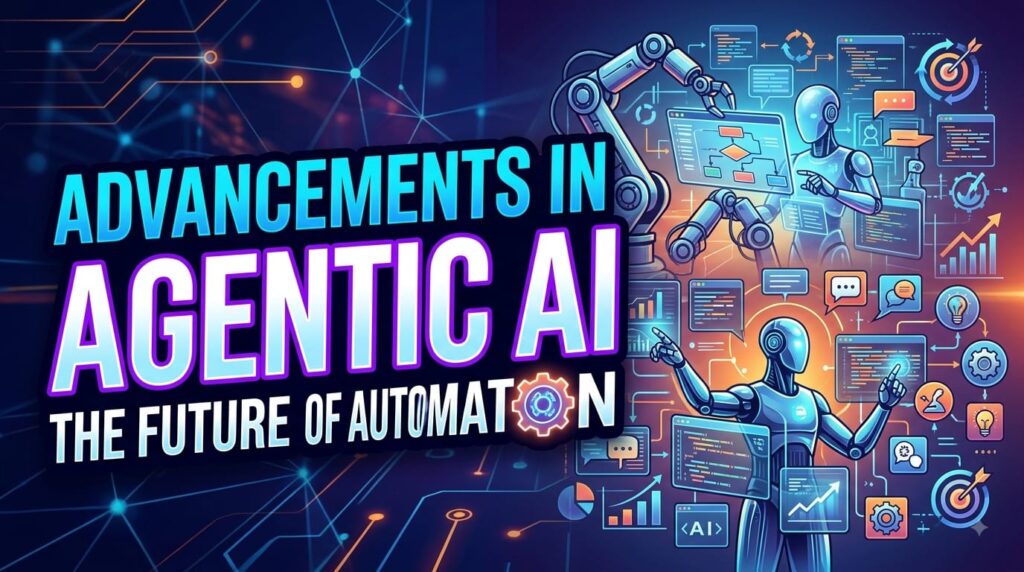
Advancement in Agentic AI
Agentic AI marks a massive shift from passive software that only answers prompts to autonomous systems that reason, plan, and execute multi-step workflows. Instead of just offering advice, these intelligent advanced agents break down broad objectives, use external digital tools, self-correct errors, and drive complete processes from start to finish.
Core Architectural Advancement:
- Autonomous Reasoning and Planning: Modern agents take a high-level goal—such as resolving customer support tickets or auditing accounts—and divide it into logical micro-tasks.
- Dynamic Tool Use: Agentic AI natively interact with external software like CRMs, databases, APIs, and command-line interfaces concurrently.
- Self-Correction Loops: Rather than crashing when an error occurs, these advanced agents analyze failures, adjust their strategy, and re-attempt actions safely.
- Multi-Agent Orchestration: Specialized agents communicate and divide labor among themselves, acting as an interconnected digital workforce.
Real-World Industry Impacts:
- Software Engineering: Agentic AI write, test, debug, and deploy code patches across repositories with minimal human oversight.
- Supply Chain and Logistics: Advanced systems track inventory shortages, optimize transport paths in real-time, and dynamically place vendor orders.
- Enterprise Operations: Routine administrative tasks, customer onboarding, and data reconciliation are managed end-to-end.
Current Challenges and Outlook
Despite rapid commercial deployment by tech leaders like OpenAI, Google, and Anthropic, scaling agentic AI remains kind of complex. Security vulnerabilities, integration roadblocks, and strict governance requirements mean organizations must carefully build robust frameworks to keep humans in the loop as these autonomous systems expand.